


“How do I boost my libido?”
“Why don’t I feel excited about sex?”
“Why can’t I control my food desires, even if I know what I should be doing?”
“How do I stop self-protecting?”
Last month, we spent a lot of time in the community, talking through these questions (join the community to get the replays)!
At first, these questions may seem unrelated. But the truth? They’re deeply interconnected. Boosting your libido, managing your food desires, and letting go of unnecessary self-protection all come from the same root.
It’s like the saying goes, a rising tide lifts all ships. Health works the same way. All healing happens the same way.
It’s not just about doing more (even though action is a critical step).
What I’ve learned, through my reckoning with the scale, the shifts I’ve made in my health, and the transformation in my relationship with my husband, was directly influenced by one thing:
Body satisfaction.
Don’t get me wrong, there are many layers to body satisfaction. It’s not a surface-level conversation, but it’s deeply connected to your identity. As I thought about the anonymous questions people have been asking, I kept coming back to the same idea: How little time do we spend inhabiting and appreciating our own skin?
Instead,
How much life do we spend attempting to “try” to change how we look?
How we “attach” ourselves to things we think will help us fit in.
How much time do we spend “wishing” things could be different?
I get it. I’ve spent plenty of time wishing I could look like someone. I’ve chased endless external strategies promising results I didn’t fully believe I could achieve.
To be honest, I was never fully content in my own skin. Not when I was at my lowest or at my highest weight.
The body dissatisfaction. The not-enoughness. The hate, for lack of better words, is a pattern that changes how we engage with everything from our relationships to what we eat, how we move, how we show up in life, and even our intimacy.
Research confirms this in our food choices:
Lower body image satisfaction is associated with increased emotional and uncontrolled eating, while higher satisfaction aligns with greater cognitive control and emotional regulation. How we perceive our body often shapes how we feed it more than biological hunger signals themselves (source).
In our sex drive:
Body image satisfaction directly impacts libido. Higher satisfaction boosts sexual desire, confidence, and frequency. Lower satisfaction can trigger sexual dysfunction, anxiety, and avoidance. Positive self-image fosters presence and pleasure, while poor body image pulls us into cognitive distractions, reducing desire and satisfaction (source).
All of that to say…
We need to talk about body satisfaction. Which starts with self-responsibility.
I know, I know, I know. We’d really just like to walk into body satisfaction, or better yet, wait for it to magically appear. But it doesn’t work that way.
The truth is, you are responsible for your body satisfaction.
Not the scale. Not your spouse. Not your friends. Not the health blogs. But you.
And there is a lot of power in owning that.
It changed things for me. I wanted to share how I made the shift and how that changed my intimate relationship with myself, husband, and even God.
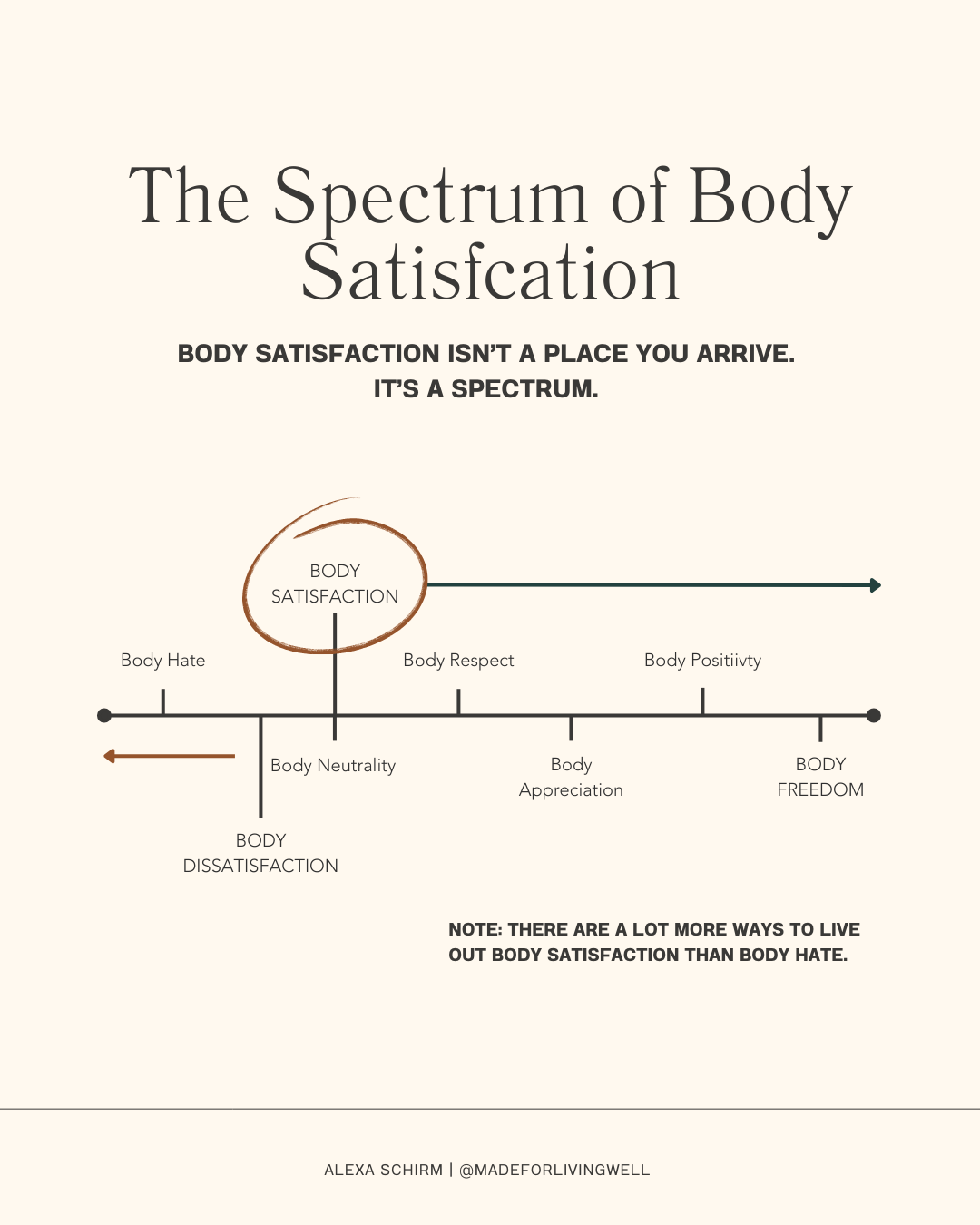
And to be clear, body satisfaction is not always about feeling good in your body. It’s not even about body positivity, but a range that most likely exists in neutrality more than anything.
It’s not about falling in love with your body. It’s about stopping the war you’ve created with your body.
It’s not expected to feel good all the time. But you can likewise celebrate when you do and not fall into despair when you don’t.
Keep reading to get:
The perspective shift that took my body satisfaction from “not satisfied” to very satisfied.
The difference between contentment and complacency.
My conversation with my husband about body satisfaction, body weight, attractiveness, and the connection to intimacy (get the “After the Episode” bonus podcast).
The actual ways body satisfaction has changed how I eat, move, and live.