
Looking Ahead at 2026: What AI Can’t Do
Read when the planning for 2026 itch hits! This will change how you view next year.
That title makes it seem like this is the last post you’re getting from me this year. It’s not. In fact, I have a few of my favorites from all year coming your way after Christmas.
One of them is my reflections on what went well and what didn’t this past year. I’ll share what I’m taking into 2026 and what I’m leaving behind. I’ve spent a good amount of time thinking through what’s working really well and what could use a bit of revision, and I’m so excited to share it.
I’m also working on a post about predicted wellness trends for 2026 — though I do hate the word trends, even if I love studying them. What I’m seeing is some big shifts on the horizon. Some I agree with, some I don’t, and I have a few predictions of my own to share, especially with the rise of AI.
Not to spoil it, but I have a more positive perspective on AI than most. I think it will actually pull us back toward what it truly means to be human, reconnecting us with the things that have quietly disappeared in the age of technology.
More on all of this after Christmas.
But all of this got me thinking ahead, and I had some thoughts about planning, specifically New Year’s planning that may be helpful, even if you’re currently suppressing the itch to think about next year until after the holidays.
I’m not trying to pull you into anything, just offering some thoughts and ideas for when it’s time to scratch that itch.
When the time comes, let this be a grounding space to propel you toward what you want, not just away from what you don’t.
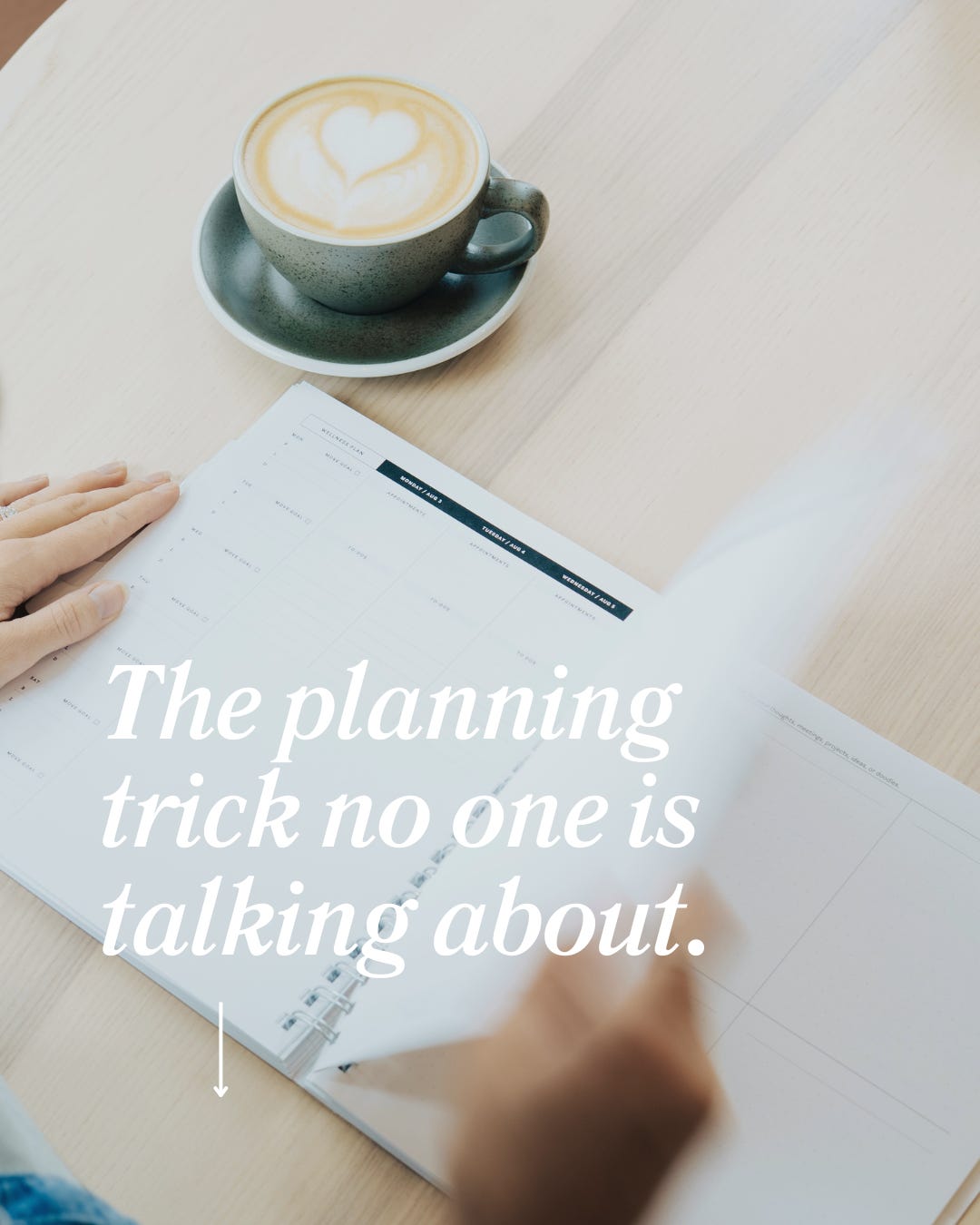
One trend I see emerging, especially in the age of AI, is a return to written plans. I know, I’m biased because I love my Nourished Planner, but hear me out.
I’m not suggesting your digital calendar is going anywhere. The convenience of everyone in your household sharing a schedule is priceless. I rely on mine too.
But written planning serves a different purpose. I’d even argue, an even bigger one in the coming years as our needs for planning and the way we live are shifting.
Not all planning is the same.
The common approach to planning is time-block scheduling, also known as containment planning.
It works to fit life into time. It’s useful, safe, and reduces decision fatigue. Most people use this type of planning every day, and it’s unlikely to go away.
But there’s another form, one that should be used alongside containment planning. It’s a creative, long-range, “outside-the-box” form of planning. The kind AI can’t replicate.
It’s called integrated life planning.
This kind of planning lives with time but also moves beyond it.
It doesn’t just schedule tasks, but it considers your energy, values, relationships, the seasons, desires, and everything that makes up who you are when developing plans.
It’s literally the opposite of everything we know about girl-boss scheduling and the infamous schedule shaming of the past.
Integrated life planning is less about control and more about vision, coherence, and creating a life, not just filling boxes.
I believe we’re moving in this direction. In fact, I think it’s becoming a necessity for reconnecting with what it truly means to be human.
What Integrated Life Planning (Wellness Planning) Looks Like:
01: You plan with your energy, not just the clock.
Instead of scheduling tasks purely by availability, you ask yourself when is the best to do this task or schedule this event?
Example: If you’re not a morning person, a 5:00 AM workout probably won’t stick (and I know you’ve tried, why keep trying if it’s not working?). Instead, schedule it later, when you have the capacity for it.
It may not be conventional, but conventional is rarely created in your way but someone else’s way, and that’s why it doesn’t work.
Plan to match how you’re wired.
02. Align Tasks With Your Values
Integrated planning connects actions to what truly matters, not just what’s urgent.
Example: If you value connection with family, instead of checking emails late at night, wait until morning and block time for a game or meaningful conversation.
It’s about intentional choices that reflect who you are.
03. Connect Daily Actions to Long-Term Vision
Rather than putting out fires while wishing for something different, use your long-term vision to shape daily outcomes.
Example: Your goal is better health. Instead of random workouts, plan weekly movement targets (like step counts or number of workouts), weekly meal prep, and monthly wellness challenges.
Integrated planning ensures you take the small (and sometimes big) steps each day that feed into your bigger picture.
04. Plan Across All Life Areas
Life isn’t just work or health. It’s about relationships, joy, personal growth, and spirituality. Integrated planning understands that each is just as necessary as the next.
The goal is not to suppress one for the sake of another, but to create balance in it all.
Example: You notice work has dominated your life recently. Balance this by scheduling a weekly coffee with a friend or a monthly adventure to keep life fun.
Planning this way prevents burnout and builds a life that is cohesive.
5. Reflect and Adjust
One of the things I love about integrated planning is that it’s iterative. You review, notice patterns, and course-correct. It’s all about learning and growth, not sitting back and expecting life to happen, but creating it.
Example: After a month, you notice your evening routine leaves is leaving you drained. Notice and then shift it. Maybe you need to try shifting your scrolling habit to a good fiction book.
This is where planning becomes dynamic, not rigid. It offers structure and stability without pressure, knowing that your plans and schedules should change with you, not box you in.
How To Start:
Integrated life planning is about living intentionally, not just managing time. You’re weaving together energy, values, relationships, and outcomes….and this works best on paper.
Which is why this is the best planning hack of all: writing things down. Writing really does change the trajectory of what you plan and how you embody it.
If you want a place to set outcomes, track wellness, prioritize assumptions, and revise your story while boosting relationships, soul-health, and everything in between, the Nourished Planner is your guide to integrated or “wellness” planning.
It’s like a tour guide for intentionally creating a life well-lived.
FYI: The OG cream-colored planner is on sale right now for $39. That comes to just under $0.11 a day. Seriously, you can’t buy anything for that anymore.
I believe 2026 will be a defining year, one that challenges us to reconnect with our humanity and the ability to create a God-filled life.
I didn’t mean to get overly poetic, but I wanted to share these thoughts so that when it’s time to plan for the new year, you don’t just think about what you want, you intentionally integrate what it takes to live it.
My hope for 2026 is lived action: not just gathering information or hopping from inspiration to inspiration, but taking radical responsibility for turning that inspiration into felt, tangible life.
Less acquiring. More experiencing.


Really solid distinction between containment planning and integrated planning. The part about aligning tasks with energy, not just the clock, is something most productivity advice completley misses. I tried the 5am routine thing once and it wrecked me for weeks until I realized mornings just aren't my creative peak. The iterative reflection piece is crucial too because life changes faster than our plans usually acount for.